
A 5% conversion rate isn’t just underperforming. It’s a leak you’re paying $2,500 a week to ignore.
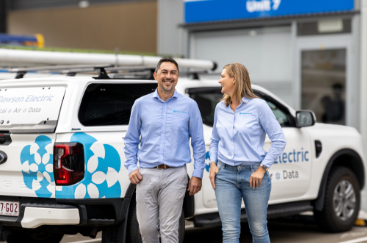
That’s exactly where Dawson Electric was sitting when they came to us.
Fifteen new leads a week felt like an impossible target. Their previous agency had been busy, building backlinks, managing campaigns, sending reports, while the actual pipeline stayed thin and the ad spend kept climbing.
Here’s the thing about a bad setup: it doesn’t announce itself. It just quietly eats budget and hands you metrics that look just credible enough that you keep paying.
Dawson Electric kept paying for over a year.
The previous agency wasn’t doing anything. That’s what makes this pattern so frustrating to unpick.
There were backlinks. There were Google Ads. There were probably dashboards with charts that pointed upward.
But a 5% conversion rate on a trade services business tells you exactly what those campaigns were actually doing: reaching the wrong people, at the wrong moment, with the wrong message. Or all three simultaneously.
For an electrical business in Melbourne, every unqualified click costs real money. A $500 daily ad budget doesn’t have room for 95% of traffic to bounce.
That’s not an optimisation problem. That’s a targeting and strategy problem. And you can’t solve a strategy problem by tweaking bid adjustments.
We’re not going to dress this up in jargon. The work was straightforward. The execution was precise.
When Dawson Electric came through, referred by an existing client, which matters, because it meant they arrived ready to actually implement, the audit was clear within the first 48 hours.
The Google Ads weren’t structured around intent. They were structured around volume. Broad targeting, loose match types, campaigns chasing impressions instead of qualified leads. The kind of setup that looks busy in a platform dashboard and does very little in the real world.
The SEO work from the previous agency had focused almost entirely on link acquisition. Links from directories, generic sites, and sources with no relevance to electrical services or Melbourne’s local market. Google’s algorithm has evolved well past the point where volume of backlinks without contextual relevance moves the needle.
What actually moves the needle for a trade business is appearing in front of someone who needs an electrician right now, in their suburb, at a price point they can act on, with enough trust signals on the landing page that picking up the phone feels like the obvious next step.
That’s the system we built.
In under a week, the conversion rate went from 5% to 25%.
Let that sit for a second.
On the same $2,500 weekly ad spend. Same market. Same competition. Same platform.
Five times more leads from every dollar spent, not because we spent more, but because we stopped wasting what was already there.
Dawson Electric is now consistently pulling 15 new leads every week. Not recycled existing customers. Not warm callbacks from people who already use them. Net new business, week after week, from a market that was always there; they just weren’t reaching it properly.
This isn’t a Dawson Electric problem. It’s an industry pattern.
Trade businesses, whether it’s electrical, plumbing, HVAC, or building services, tend to inherit Google Ads setups built by generalist agencies that don’t understand how local service intent actually works.
They don’t understand that someone searching “emergency electrician [suburb]” and someone searching “electrician cost” are at completely different stages of the buying process and need completely different campaigns, landing pages, and conversion mechanisms.
They built one campaign. Point it at everything. Wonder why the conversion rate is stuck at 5%.
Then they sell the client on more backlinks.
The uncomfortable reality is that a 5% conversion rate in trade services isn’t a baseline. It’s a sign that something is fundamentally wrong with how the campaign is structured. Industry benchmarks for well-run electrical contractor campaigns sit between 15% and 30%, depending on the market and service type.
Dawson Electric is now at the top of that range. In under a week.
|
Before |
After |
|
|
Conversion Rate |
5% |
25% |
|
New Leads Per Week |
– |
15 |
|
Weekly Ad Spend |
$2500 |
$2500 |
|
Lead Quality |
Poor |
Dozens of Qualified New Leads |
Same budget. Five times the output.
If your conversion rate is sitting below 10% on a trade services campaign, you are not facing a traffic problem. You’re facing a targeting and conversion problem. And the solution isn’t more budget.
The solution is building a system where every dollar of ad spend is working to reach someone who is actively ready to book, then giving them a clear, fast, frictionless path to do exactly that.
That’s what we did for Dawson Electric. It’s what we do for every trade and service business that comes through us.
The leads are already out there. They’re searching right now. The question is whether your campaign is reaching them, or someone else’s is.
If you’re spending on Google Ads and not seeing results that reflect that spend, contact us to talk through what’s actually going on in your campaigns. We’ll tell you straight.