A fragmented campaign structure was quietly killing their results. Here’s how consolidating to one campaign, rebuilding every landing page, and fixing the fundamentals drove an 8–16x return on ad spend, every single month.
Five hundred ad groups. One keyword per suburb. A budget being split so thin it couldn’t compete in a market where a single click costs $20.
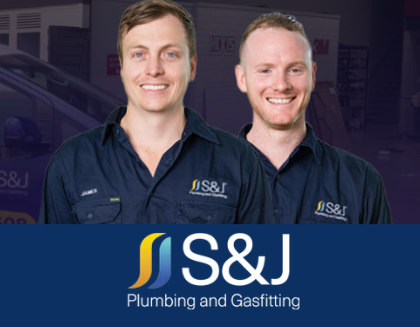
That’s what James walked in with.
Within a week of working with us, his conversion rate had jumped from 5% to 20–25%. Within months, his worst return on ad spend was 8x. His best was 16x. The problem he ended up with wasn’t leads, it was plumbers.
This is how we got there.
The Problem
The previous provider had done what most agencies do.
One keyword per suburb. Dozens of ad groups, maybe hundreds. It looks thorough on a campaign dashboard. In practice, it’s a structural problem disguised as a strategy.
SJ Plumbing’s daily budget was $500. Plumbing across Australia is a competitive market; the cost per click sits around $20 to $21 for core service keywords. When you divide a $500 budget across 500 campaigns, none of them has enough spend to compete. The algorithm can’t learn. The ads can’t build momentum. You’re not really running one campaign; you’re running 500 underfunded ones.
The landing pages weren’t helping either. One page trying to serve every service, no alignment between what the ad promised and what the page delivered. In a market where a visitor decides in seconds, that mismatch costs conversions before you’ve had a chance to earn them.
James knew the results weren’t where they should be. He just didn’t know why.
What We Did
Consolidated the campaign structure first.
The fragmented setup came down. Everything went into one consolidated campaign, not because simpler is always better, but because the budget demanded it. At $500 a day in a $20-per-click market, you need your spend concentrated enough to actually compete. Split across hundreds of ad groups, that money was disappearing without any single keyword getting the volume needed to perform.
Consolidation let the budget work the way it was supposed to.
Rebuilt every landing page, one per service.
This is where the conversion rate problem actually lived.
We created a dedicated landing page for each service James wanted to advertise: blocked drains, hot water, general plumbing, and emergency callouts. Each page was built around one job: take the specific search intent that brought someone there and turn it into an inquiry.
Clear service messaging. Mobile-first layout. Contact details prominent and accessible. Nothing is competing for attention with the CTA.
When the ad and the landing page are aligned, same service, same language, same intent, Quality Score improves, cost per click drops, and conversion rate climbs. That’s not theory. That’s what happened.
Built a campaign for each service.
Once the landing pages were in place, we built a dedicated campaign around each one. Ad copy, keywords, and landing page are all pulling in the same direction. The structure that the previous provider had applied at the suburb level, we applied at the service level, which is where it actually makes sense.
Within a week, James flagged it himself. Conversion rate had moved from 5% to between 20 and 25%. And that’s the recorded rate. A portion of callers dial straight from the search result without ever clicking the number; those conversions don’t show up in the data. The real rate was higher.
The Results
8x return on ad spend in the worst month. 15–16x in the best.
For every dollar James spent on ads in his strongest period, $15 came back. In a slow month, it was $8. There wasn’t a month that the campaign didn’t return multiples.
The challenge that emerged wasn’t performance. It was capacity.
Every two or three weeks, James would message asking whether the budget could be pulled back. Not because the ads weren’t working, but because they were working too well. He was fully booked. His team couldn’t keep up with the volume.
Eventually, he hired more staff. More trucks on the road. The infrastructure caught up with the demand the campaign had created.
Why This Worked
Budget consolidation over campaign sprawl.
Dividing $500 across hundreds of campaigns is how you guarantee mediocre results across all of them. One consolidated campaign gave the algorithm enough signal to optimise, and gave each keyword enough volume to actually compete.
Landing page alignment, not an afterthought.
The conversion rate didn’t jump because we wrote better ad copy. It jumped because we stopped sending traffic to a page that wasn’t built to receive it. Service-specific pages matched to service-specific campaigns, that alignment is where the 150% conversion rate lift came from.
Quality Score did the heavy lifting.
In a $20-per-click market, you can’t outspend competitors without a serious budget. You can outperform them on relevance. Ad structure, keyword intent, and landing page copy all tightened together, improving ad relevance and placement without requiring a bigger spend.
The structure matched the budget, not the other way around.
The previous agency built a campaign architecture designed for a budget they didn’t have. We built one designed for the budget James actually had. That’s the difference between a campaign that looks thorough and one that performs.
The Real Ceiling Isn’t Leads, It’s Capacity
Most trade businesses come to paid ads hoping for more calls.
The harder problem, the one James ran into, is building the operational infrastructure to actually absorb consistent demand. Ads can generate leads faster than a business can hire. That’s a good problem to have. But it’s still a problem.
The campaigns are still running. The return on ad spend is still tracking. And SJ Plumbing now has the trucks on the road to answer the phone when it rings.
If your current campaign structure looks anything like what James started with, that’s worth a conversation. Contact us.