
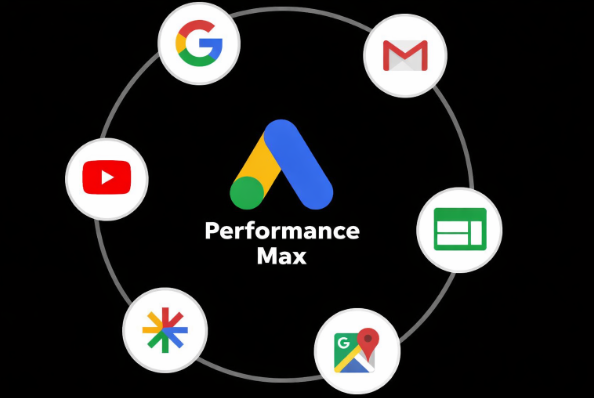
Google built Performance Max to be the campaign type you can’t say no to.
One campaign. Every channel. Machine learning handles the rest. Sounds like the future, right?
Here’s what Google didn’t mention in the pitch deck: Performance Max is designed to look good on a dashboard, whether it’s actually growing your business or not.
It cannibalises your branded search. It retargets warm audiences and calls them “new customers.” It spreads your budget across YouTube, Display, Gmail, Maps, and Shopping, then gives you almost no visibility into where the money actually went.
And the worst part? Most agencies are celebrating the inflated ROAS numbers without ever asking whether those conversions would’ve happened anyway.
Strip away the marketing language, and Performance Max is Google’s answer to Meta’s Advantage Plus targeting. Same pitch. Leave everything to us, hand over your assets, and our AI handles the rest.
You give Google your creative assets, your product feed, your conversion goals, and your budget. From there, the algorithm takes over. It decides where your ads appear, who sees them, what format they take, and what you pay per click. You don’t get a say in any of that.
Where it differs from Meta is in reach. Meta is Facebook and Instagram. That’s it. Performance Max pushes your ads across Google’s entire ecosystem, Search, Shopping, YouTube (horizontal video, vertical video, Shorts), Gmail, the Display Network and every third-party website running Google ads on it, Google Discover, Google News, and Maps. All from a single campaign. That’s an enormous surface area.
With traditional Google Ads campaigns, you’re in the driver’s seat. You pick the keywords. You choose the placements. You set the bids. You decide who sees what and when. Performance Max takes that steering wheel away and hands it to the machine.
And here’s the part that should make you pause: Google is both the platform selling you the ads and the algorithm deciding whether those ads performed. They are marking their own homework.
Unlike traditional Search campaigns, Performance Max isn’t keyword-driven. It’s testing-driven. The algorithm cycles through combinations of headlines, descriptions, images, and audiences, constantly iterating to find what converts. There are no keywords to optimise. No search terms to refine. The machine is running the experiments, and the advertiser’s role is reduced to feeding it assets and setting a budget.
On paper, Performance Max exists to help you get better results with less effort. In reality, it’s the biggest cash grab in Google Ads history.
Every time you run a manual Search campaign, you’re choosing exactly which keywords to bid on. You’re excluding irrelevant terms. You’re setting max CPCs. You’re limiting Google’s ability to spend your budget.
Performance Max removes all of those guardrails.
Now Google decides the keywords. Google decides the placements. Google decides the audience. Google decides how much to pay. You just put a budget in, and Google makes sure to spend it. That’s what Google does.
The algorithm is optimised to find conversions, yes. But it’s also optimised to find reasons to spend your entire daily budget. Those are not always the same thing.
If you’re a lead generation business running Performance Max, Google will put your ads on image placements, video placements, and inventory where you’re never going to generate a qualified lead. But they’ll still charge you for every click, because the algorithm’s job is to spend your budget, not to question whether the placement makes sense for your business model.
Performance Max has had the most unreliable reporting metrics of any Google Ads campaign type for as long as it has existed. You can’t control which platform gets the bulk of your spend. You can’t see a clear breakdown of where your money went. Google tells you that you got impressions and clicks, but the details behind those numbers are almost non-existent.
Here’s a perfect example of how bad it gets. Google’s Display Network includes millions of websites. If you ever pull the display network placement report from a Performance Max campaign, you’ll find a significant portion of your impressions coming from children’s apps. Games and apps designed for kids, running ads that generate accidental clicks from toddlers. Those clicks are completely irrelevant to your business. They’re not helping you grow. They’re helping Google bill you.
And because Performance Max provides so little transparency into placement-level data, most businesses never even realise it’s happening.
This is the single most important thing to understand about Performance Max: it will prioritise the easiest conversions first.
You’ve got a Search campaign running branded keywords. It’s your best performer. Low CPC, high conversion rate, incredible ROAS. These are people who already know your name, already want to buy from you, and are typing your brand into Google to find your website.
You launch Performance Max.
Within two weeks, your branded Search campaign’s volume drops. Your Performance Max campaign’s numbers look spectacular. Your agency sends you a report showing how well PMax is performing.
What actually happened? PMax took priority over your branded Search campaign in the auction. It claimed credit for conversions that were already yours. Same customers, same intent, same outcome, just now attributed to a different campaign.
Your total revenue didn’t change. Your ad spend went up. And everyone’s celebrating.
Performance Max is an algorithm designed to get you more conversions and conversion value. By default, that means it’s going to target people who already know your brand and are most likely to convert. It’s not finding new customers. It’s harvesting existing demand and charging you for the privilege.
Yes, Google offers the option to exclude current customers from Performance Max targeting. But the process is tedious, far from seamless, and even when configured properly, it’s not perfect. Unlike Meta, which has well-established lookalike audiences and clean exclusion functionality, Google’s version feels like an afterthought.
Performance Max isn’t all bad. When it’s set up correctly and measured honestly, it does have genuine advantages.
E-commerce is where it earns its keep. Display and imagery make a real difference for product-based businesses. Because Performance Max includes Google Shopping and integrates your Merchant Centre feed, it handles product-intent matching at scale better than most manual setups. For e-commerce, Performance Max should be part of the strategy. That’s not even a debate.
Video reach without the Demand Gen headaches. Performance Max is a far more effective way to get video content in front of people quickly than Google’s Demand Gen campaigns. If video is part of your strategy, PMax handles the distribution across YouTube’s various formats, horizontal, vertical, and Shorts, without the complexity of managing a standalone video campaign.
Small businesses with strong reviews. If you’re a local business sitting on a strong review base but without a massive advertising budget, this is where PMax earns its spot. Your reviews, your location data, and your ads pull together across Search, Maps, and Display, so there’s no need to build and manage separate campaigns for each channel.
PMax also tends to win on ad quality scoring. Google assigns quality scores across all campaign types in your account. If a Search ad and a Performance Max campaign are both competing for the same intent, the one with the higher quality score takes priority. Because PMax is constantly testing creative combinations at speed, it often edges out static Search ads on this metric.
That speed is the other genuine advantage. Google is mixing and matching your headlines, images, videos, and descriptions across different audiences and placements faster than any human team could replicate. Months of manual A/B testing compressed into days.
None of that matters, though, if you’re not measuring incrementality. Every one of those benefits evaporates the moment you start treating platform-reported ROAS as the truth.
Most Performance Max guides walk you through clicking buttons in Google Ads. That’s useless. What actually determines whether PMax works for your business happens before you touch the campaign builder.
If your conversion tracking is broken, Performance Max will optimise for the wrong thing. Enthusiastically. The algorithm doesn’t know the difference between a high-value lead and someone who accidentally submitted a form. It just sees “conversion” and goes hunting for more. Broken tracking has derailed entire accounts, and PMax makes the damage worse because the algorithm compounds every tracking error at scale.
Track the actions that actually matter. For e-commerce, that means purchase events with accurate revenue values, not add-to-carts dressed up as conversions. For lead generation, that means qualified form submissions and phone calls, not newsletter signups.
Assign different values to different conversion types. A phone call from someone ready to buy is worth significantly more than a brochure download. If you don’t tell Google that, it’ll treat them equally and optimise for whichever is cheapest to generate.
Exclude your branded terms from Performance Max. If you don’t, PMax will consume your branded Search traffic, report spectacular ROAS, and you’ll have no idea that those conversions were already yours.
Use Google’s brand exclusion feature within PMax settings. Add your brand terms as account-level negative keywords for additional protection. Then monitor your branded Search campaign volume after launching PMax. If it drops, something’s leaking.
Audience signals are suggestions, not restrictions. You’re telling Google, “People like this tend to buy from us,” and the algorithm uses that as a launching pad before expanding to broader audiences.
What works: upload your customer match list. Add remarketing audiences from your website. Include in-market audiences relevant to your products. Layer in custom segments based on search behaviour.
What doesn’t work: adding a single small audience and expecting Google to build a campaign around it. Be strategic. Give Google a clear picture of your best customers, then let it find more people who look like them.
This isn’t Meta. This isn’t people scrolling through a feed in their downtime. Performance Max serves ads to people checking their Gmail inbox, watching YouTube during a break, browsing Google News, or actively searching for something specific. The context is completely different.
Your long headlines appear on Gmail, Google Discover, and Google News. Don’t write them like a sales pitch. But make them sharp enough that someone scanning their inbox or swiping through Discover actually stops and clicks.
Get your dimensions right across every format. Use real images. your actual products, your actual team, not stock photography that could belong to any business in any industry. Write headlines around specific problems you solve or specific offers you’re running. Vague brand statements don’t convert on these placements. Specificity does.
Videos are where most businesses quietly haemorrhage budget. If you don’t upload your own, Google will auto-generate them from your static images. The quality is consistently poor. There’s no opt-out. The only way to prevent it is to upload something better. So either invest in proper video creative or accept that the YouTube portion of your PMax campaign is spending money on content that actively undermines your brand.
Once your assets are live, the work isn’t finished. Google rates every asset — text, images, video — as Low, Good, or Best. Cut the Low performers. Build more of what’s working. Keep the rotation fresh. PMax campaigns deteriorate when the creative goes stale. The algorithm needs new inputs to keep finding new opportunities, and if you’re not feeding it, performance will quietly erode while you’re busy looking at last month’s numbers.
An asset group combines your product selection, creative assets, and audience signals into a themed unit. The biggest mistake is creating too many with too little data in each.
Google needs volume to learn. If you split your budget across fifteen asset groups, none of them will generate enough conversion data to optimise properly. Start with broad product categories and let the algorithm determine which specific products to push.
Google recommends 30 to 50 conversions per campaign per month as a minimum. If you can’t reach that threshold, consolidate further.
Performance Max needs volume to learn. Google recommends a daily budget of at least three times your target CPA. If your average cost per conversion is $80, you need at least $240 per day.
If your total Google Ads budget is under $2,000 a month, PMax on its own probably isn’t the right move. But here’s where context matters.
For some industries, Performance Max on a smaller budget actually makes more strategic sense than a standalone Search campaign. Take the keyword “digital marketing agency” as an example; the cost per click sits anywhere between $40 and $80. If your entire daily budget is $80, a single Search click could consume it. In that scenario, Performance Max might deliver more total clicks and broader visibility for the same spend.
The key distinction is this: Performance Max isn’t effective as a standalone campaign on a large budget. It needs other traffic sources feeding into it. But on a smaller budget where the alternative is one or two expensive Search clicks per day, it can actually be the smarter allocation.
This is where the budget strategy gets conditional. If a business is already investing in top-of-funnel activity, Meta ads driving cold traffic, Search campaigns targeting unbranded keywords, and organic content pulling in new visitors, then allocating meaningful budget to Performance Max makes sense. PMax is exceptional at retargeting those warm audiences and converting them. The top-of-funnel spend feeds the PMax machine, and PMax closes the loop.
The relationship is symbiotic across platforms, too. A user who clicks a Meta ad and visits the website is now tagged for Google remarketing. When they search again, PMax picks them up. Conversely, someone who engages with a Google ad gets added to Meta’s retargeting pool when they next open Instagram. Each platform strengthens the other’s targeting data. But that only works when there’s fresh traffic entering the system. Without it, PMax is just recycling the same shrinking audience at increasing cost.
Every PMax campaign goes through two to four weeks where Google is testing audiences, placements, and bidding strategies. Performance will be volatile. CPAs will spike. Conversion rates will fluctuate. Ads will appear in places that seem random.
Don’t make changes during this window. Every significant adjustment resets the learning process. Wait at least two weeks before touching anything unless there’s a clear technical issue.
This is where most agencies fall apart. They report PMax ROAS and call it a day. That number tells you nothing about whether Performance Max is generating revenue that wouldn’t have existed without it.
Turn off Performance Max for two weeks and see what happens to your total business revenue. Not your Google Ads revenue, your total revenue across every channel.
If revenue barely moves, PMax was claiming credit for sales happening anyway through organic search, direct traffic, email, and other channels.
If revenue drops significantly, it’s genuinely driving incremental conversions, and you should scale it.
Your Google Ads dashboard is not where you go for honest answers. Google Analytics is.
If conversion tracking is set up properly, Google Analytics will show you returning customer rates, new customer acquisition, and the actual user journey across channels. If your returning customer percentage is climbing while new customer acquisition is declining, that’s Performance Max doing what it does by default: retargeting existing audiences rather than finding new ones.
Context matters here. A meal prep company or subscription-based business should have a healthy returning customer rate; that’s the model. But if that rate is significantly higher than the industry norm, it’s not organic loyalty driving those numbers. It’s PMax burning budget to re-acquire customers who were coming back anyway. The metric to watch isn’t whether returning customers exist. It’s whether the ratio has shifted since PMax launched, and whether new customer volume has dropped as a result.
This is exactly what happened to one agency client running both Advantage Plus and Performance Max as their only advertising channels. For two months, the numbers looked brilliant. Strong ROAS, good volume. By the third month, the returning customer rate started declining, and new customer acquisition hit its lowest point. The campaigns had exhausted the retargeting pool because there was no top-of-funnel activity feeding fresh audiences into the system.
Performance Max needs a healthy top of funnel to sustain itself. Without an integrated approach where Search campaigns, organic content, Meta ads, and other acquisition channels feed fresh audiences into the system, PMax will eventually burn through your existing audience and plateau.
Stop looking at channel-by-channel reports in isolation. Google says PMax drove a conversion. Meta says their retargeting ad drove the same conversion. Your email platform claims its welcome sequence closed the deal.
The reality is that the customer probably touched all three channels before converting. The conversion happened once. The reporting counted it three times. This is the double-dip economy at work, Google and Meta both claiming credit for the same sale while you fund it twice.
Build measurement systems outside the platforms. Use server-side tracking. Compare total claimed conversions across all platforms against your actual revenue. The gap between those numbers is your double-counting rate.
E-commerce is where Performance Max is strongest. Google’s algorithm excels at matching product intent with purchase behaviour, and a well-optimised Merchant Centre feed gives it a significant data advantage. Feed quality is everything; titles, descriptions, images, pricing, and category data determine how well PMax can match your products to relevant searches. Incomplete feeds will undermine your campaign before it has a chance to perform.
Lead generation is harder. Buying intent is ambiguous when someone is searching for a service rather than a product. The algorithm struggles to distinguish between someone who is genuinely ready to engage and someone casually researching. For lead gen, you need weighted conversion values and offline conversion imports feeding closed-deal data back to Google, so the algorithm learns what a qualified lead actually looks like rather than optimising for the cheapest form submission it can find.
Performance Max isn’t inherently good or bad. It’s a tool. And its value depends entirely on whether you understand what it’s actually doing versus what it’s telling you it’s doing.
Most businesses running PMax right now are in one of two situations. They’ve got inflated ROAS numbers and no real visibility into whether the campaign is growing their business. Or they’ve launched PMax, watched it cannibalise their existing campaigns, and can’t figure out why total revenue hasn’t moved despite the dashboards improving.
The businesses getting genuine results from Performance Max have done the work that doesn’t show up in a screenshot. Clean conversion tracking. Brand exclusions are configured properly. New-versus-returning customer segmentation is built into their analytics. Incrementality testing is a standard part of their measurement framework. Quality creative assets that get refreshed regularly. And critically, other traffic sources. Search campaigns, organic content, Meta ads, email, feed fresh audiences into the top of the funnel so PMax has something meaningful to work with.
They’re not treating Performance Max as a replacement for strategy. They’re treating it as one component of a broader system where every channel supports every other channel, and every dollar is measured against actual business outcomes rather than platform-reported vanity metrics.
Google will keep pushing more automation. Performance Max today, something even less transparent next year. The businesses that thrive through that shift won’t be the ones that handed Google the keys and stopped asking questions. They’ll be the ones who understood the algorithm’s incentives, built measurement systems outside of it, and held every campaign accountable to real revenue.
That’s not what Google wants you to do.
But it’s the only approach that actually works.
If you’re not sure whether your Performance Max campaigns are driving genuine growth or just expensive retargeting, we can help you find out. Get in touch to build a measurement framework that shows you the full picture.